
Finding Community in Motion: Carlos’ First Parade with PRPSN
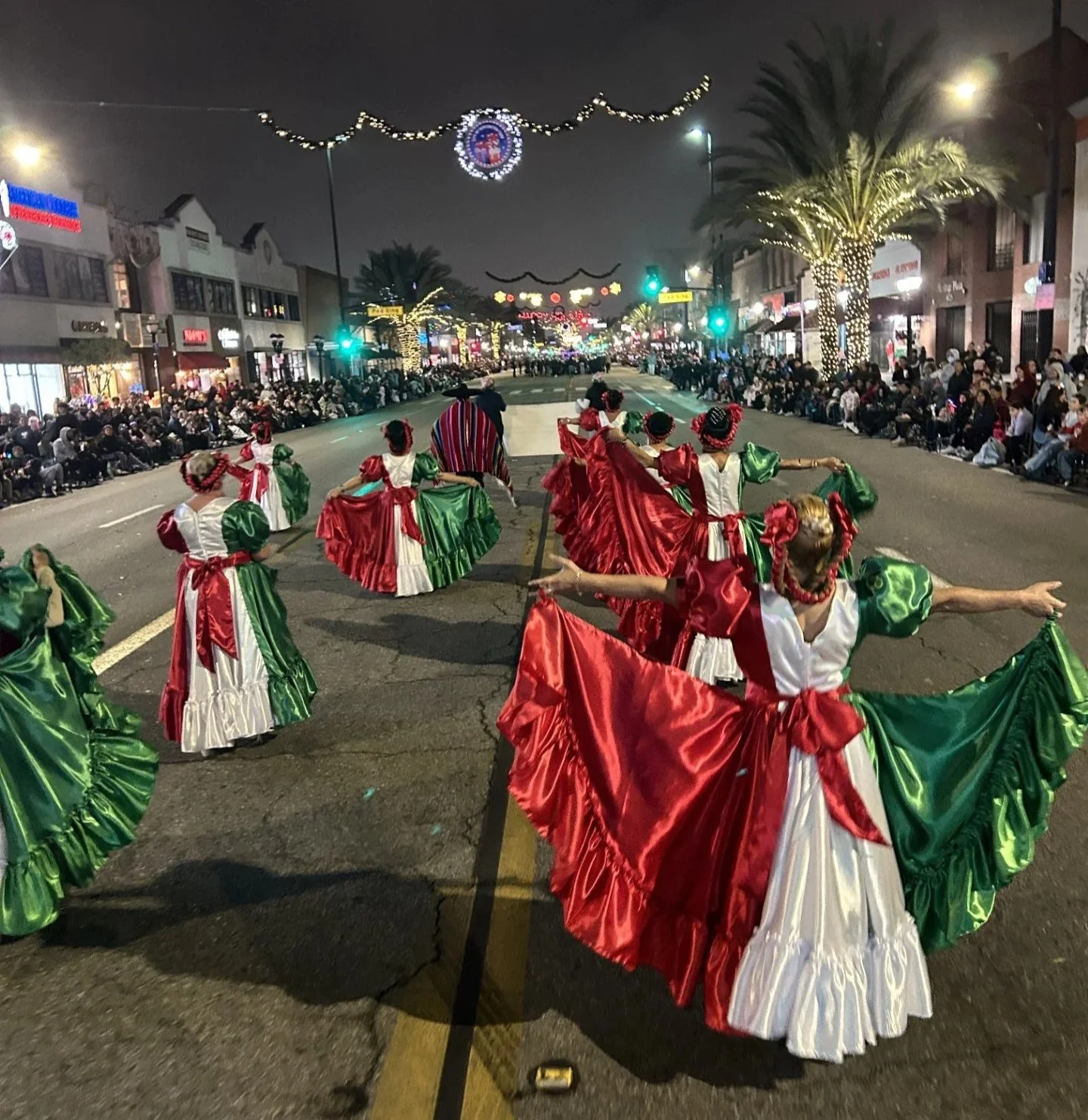
Carlos started working as a Peer Supporter in November at El Centrito de Apoyo which is a Spanish-language peer-led program under the umbrella of PRPSN in Huntington Park. They offer peer support, resources, support groups, housing assistance, employment support, and other guidance at their storefront location and through their outreach program, Un Paso Mas.
Every December the City of Huntington Park hosts an annual Christmas parade and this year they invited El Centrito and Un Paso Mas staff to join for the first time. It was determined that the Balet Folklorico group would perform. When Carlos arrived on the day of the parade, he didn’t quite know what to expect. However, he quickly discovered that this wasn’t just a work commitment—it was an opportunity to celebrate the community he and his colleagues serve every single day.
Thousands of people lined the streets, five rows deep in some places. The energy was buzzing. He spotted familiar faces and watched as the PRPSN folklórico dancers prepared. That’s when it hit him: this is the real deal.
While others danced, Carlos had his own important role, pulling the large speaker that powered the dancers’ music. It may not have been center stage, but to him, it mattered. “Even though I wasn’t dancing, I knew my role was important. I had to be on cue. I had to make sure the music stayed with them.”
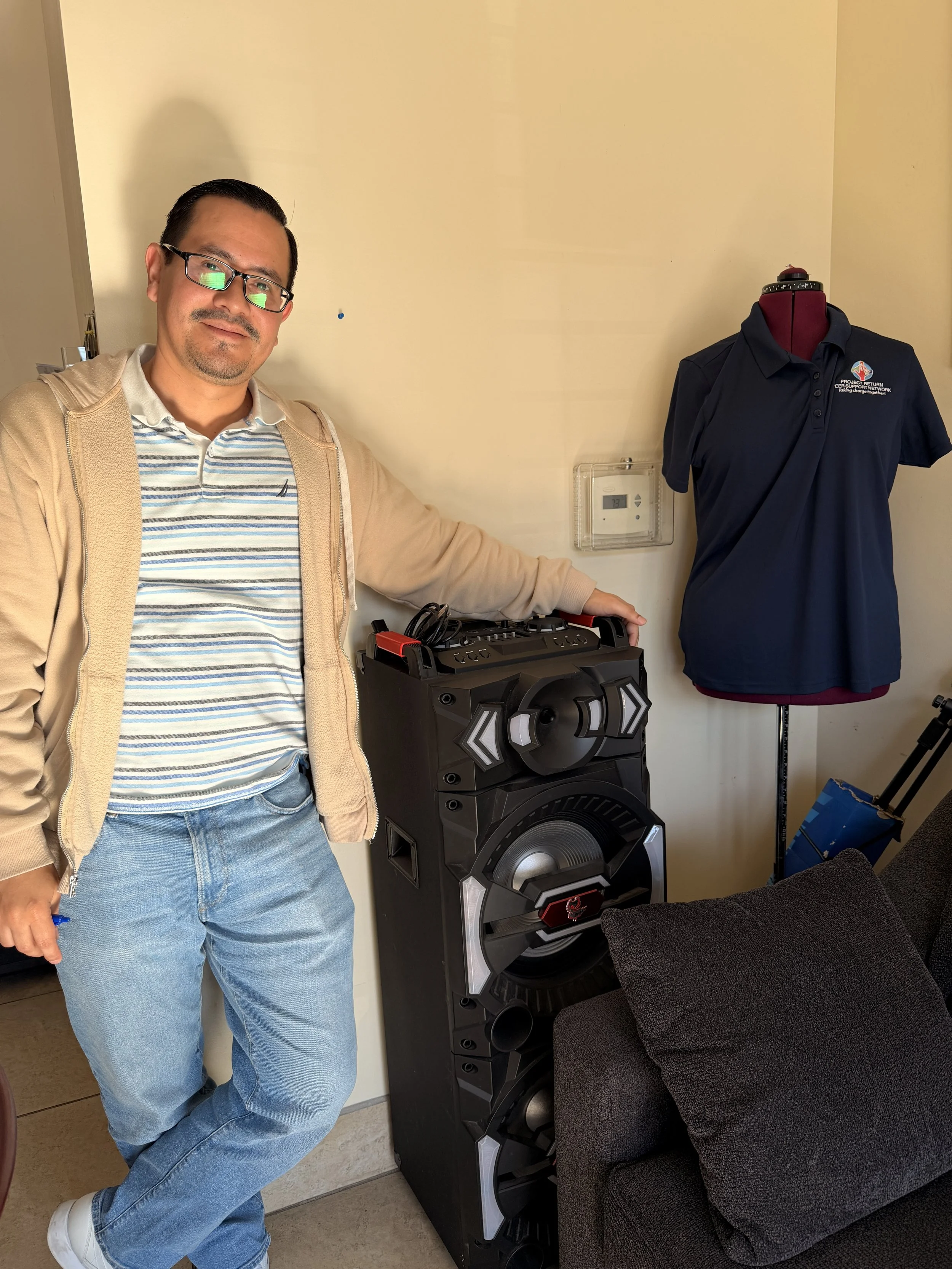
Carlos posing alongside the large speaker which powered the music.
The parade became a living example of PRPSN’s mission--opportunities for connection that enrich and inspire individuals with mental illness to pursue a life without limits. Being visible and proud alongside the community mattered just as much as the services offered inside their office walls.
The folklórico dancers moved forward, dancing continuously, in heels, for what felt like miles, said Carlos. The crowd responded with pure joy. People stood, cheered, and yelled proudly, “¡Viva México!” The dancers’ stamina left Carlos in awe. Even when the team tried to offer water, the dancers waved it off, determined to keep moving.
“They toughed it out,” he said. “I had nothing but respect for them.”
But beyond the movement and music, what stayed with Carlos most was the meaning behind it all. Walking alongside the dancers, he felt the beauty of cultural representation.
“People were proud of their roots. Especially now, when so many are feeling targeted or afraid because of their accent, their name, their skin… seeing their people walk proudly down the street mattered.”
“That’s peer support,” Carlos said. “That’s what people need to see—that they’re not alone.”
That realization has stayed with him. Every day, Carlos meets community members who walk in feeling stressed or unsure of where to turn. They are overwhelmed by what might seem like small tasks, renewing a passport, filling out a form, and finding resources.
One woman recently walked in unsure if anyone could help her. When Carlos told her they could and that it wouldn’t cost her anything, her relief was immediate.
“I couldn’t see her smile because she had a mask on,” he said, “but I could see it in her eyes.”
Before leaving, she asked for flyers and calendars to share with her neighbors. She wanted others to know this place existed. As she walked out, she said, “May God bless you.”
Starting his job with experiences like the parade and daily moments of connection has affirmed something deep for him. “This is where I’m supposed to be,” he said simply. “It fills your heart...and I wake up happy to come to work. I don’t feel like, ‘here goes another eight hours.’ I feel like, ‘let’s see what today brings.’”