
Building a New Generation of Peer Supporters and Leaders
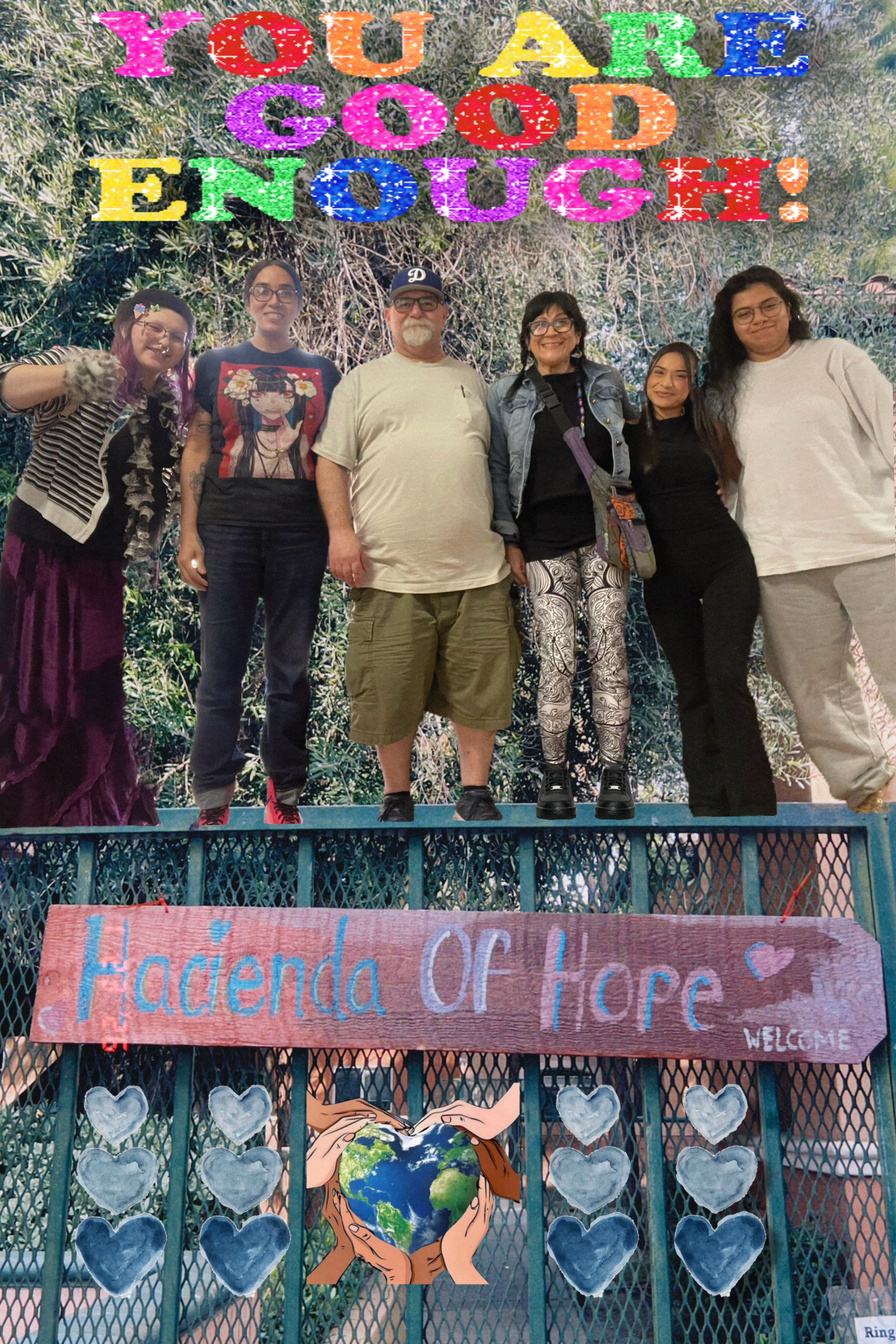
A powerful photo collage capturing Quin’s experience at Hacienda of Hope— they traveled by train and bus from Santa Fe Springs to Long Beach, demonstrating their commitment to showing up for themselves and others. This collage was a testament of their experience.
What does peer support look like for transitional-age youth in practice?
In January, PRPSN held its first-ever CAPS training exclusively for transitional age youth (ages 18–25). Funded by Cedars-Sinai, the program aimed to increase the number of transitional-age youth working as peer supporters in Los Angeles County. It created a space where young people felt free to be their full selves, experience peer support firsthand, and be valued through paid work opportunities.
Over the course of three weeks, a cohort of 12 participants engaged in both classroom learning and on-the-job training. What made this cohort unique was not just their age, but CAPS’ approach to removing barriers and creating meaningful pathways into the peer support workforce for youth with lived experience. This approach expands access, deepens authenticity in peer support spaces, and redefines what support can look like for their generation and those to come.
Participants applied their newly acquired knowledge in two primary settings: Hacienda of Hope, PRPSN’s peer respite home in Long Beach, and online through HeyPeers. Both opportunities provided safe spaces for co-facilitation and allowed participants to put their new skills into practice.
Online, peer-led groups explored topics such as music, poetry, and boundary-setting. Participation increased as more individuals engaged in dialogue rooted in shared experiences. A consistent theme emerged—a deep sense of belonging built through honesty.
One participant reflected on a Music Recovery online group that captured the essence of peer support:
“What stood out to me most was what happened afterward. Someone unmuted themselves and thanked me for the song, explaining that they had never felt so connected during a group before and that they were painting while listening to it... Being in these groups showed me how powerful it is just to show up, listen, and be there for someone without trying to have answers to everything.”
These moments illustrate what makes peer support effective. It is not about providing answers, but about creating space for connection and shared healing. The TAY cohort consistently reported increased confidence in their ability to support others, alongside a deeper understanding of their own lived experiences as sources of strength.
At Hacienda of Hope, participants saw these principles in action face-to-face. They observed how safe, peer-led environments allow individuals to rest and rebuild. For many, this was their first time witnessing intentional, peer-led care and the impact it can have.
“I realized how important it is to create an environment where individuals feel safe, comfortable, and understood. Everyone deserves a space where they can take time for themselves without feeling judged, and seeing this in action made a strong impression on me,” shared another participant.
Participants also experienced significant personal growth. Many entered the program feeling uncertain about their life’s direction and left with a renewed sense of purpose and clarity.
“With the right support and a community that uplifts you, you can keep going.”
Across reflections, participants emphasized that healing happens in the community. They developed critical skills in active listening and emotional awareness—tools that not only prepare them for roles as Medi-Cal Peer Support Specialists but also strengthen their resilience in everyday life.
This cohort is a powerful example of what is possible when young people are given the tools and support to lead.
“Starting CAPS, I was very hesitant about what was going to come, and to my surprise I found such purpose not only in my cohort but in my internship as well,” said another participant. “I found heartfelt connections with the residents, staff, and my cohort that I will cherish forever.”
Currently, six of the 12 participants have successfully passed their Medi-Cal Peer Support Specialist certification through CalMHSA, marking an important step toward entering the behavioral health workforce.